
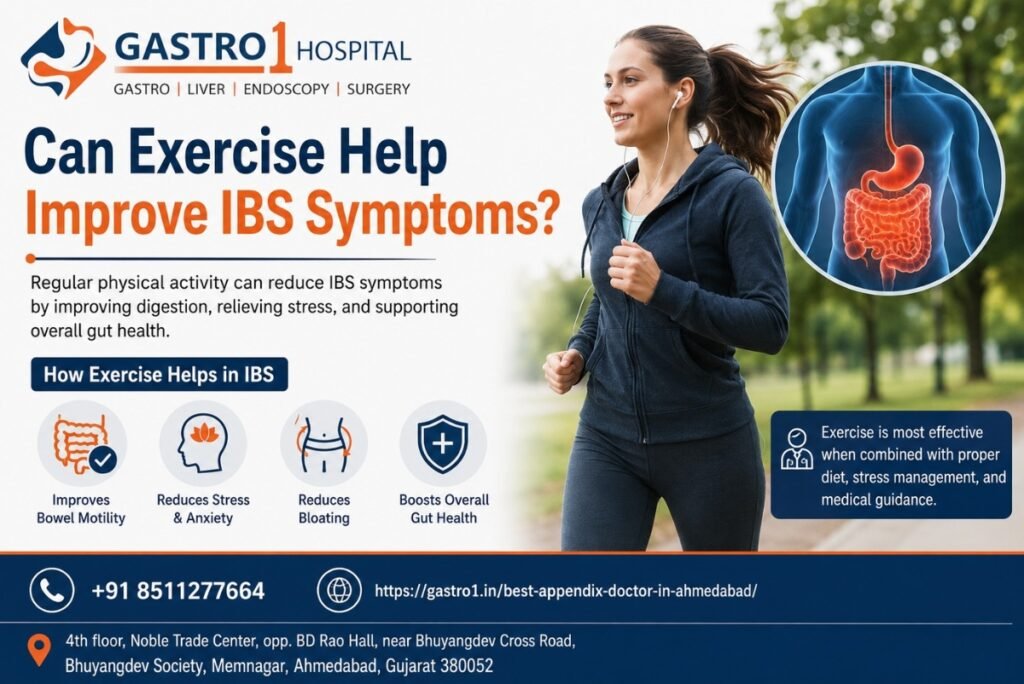
Can Exercise Help Improve IBS Symptoms?
If you have been living with IBS, you already know how unpredictable it can be. One day you feel fine, the next you are dealing with cramps, bloating, or rushing to the bathroom at the worst possible time. Medication helps, diet changes help but exercise? That one does not always come up in the conversation. Yet research and clinical experience both point to the same conclusion: regular physical activity can genuinely reduce IBS symptoms for many people. For anyone looking into the best IBS treatment in Ahmedabad, understanding the role of exercise as part of a broader management plan is worth your time.
What Exactly Is IBS and Why Does It Keep Coming Back?
IBS, or Irritable Bowel Syndrome, is a condition that affects how the large intestine functions. It does not cause structural damage to the gut, but it does cause real, recurring symptoms abdominal pain, bloating, gas, constipation, diarrhoea, or a mix of both.
The reason IBS keeps coming back is that it is driven by a combination of factors: gut sensitivity, changes in bowel motility, stress, diet, and the gut-brain connection. This last one is especially important. Your gut and brain are in constant communication through the nervous system, and when stress or anxiety levels rise, the gut often reacts. This is why IBS tends to flare up during stressful periods and why managing stress is considered a core part of treatment at any good gastroenterology hospital in Ahmedabad.
So, How Does Exercise Help?
Exercise works on IBS through several pathways and that is what makes it genuinely useful rather than just a generic wellness tip.
First, physical activity helps regulate bowel motility. For people with IBS-C (constipation-dominant IBS), regular movement helps stimulate the gut and keeps things moving more consistently. For those with IBS-D (diarrhoea-dominant), moderate exercise can help regulate the pace of digestion rather than speed it up further.
Second, exercise is one of the most effective tools for managing stress and anxiety. Since the gut-brain axis plays such a significant role in IBS, anything that reduces psychological stress tends to reduce gut reactivity as well. Exercise triggers the release of endorphins the body’s natural mood regulators which in turn has a calming effect on the nervous system and the gut.
Third, regular physical activity has been shown to reduce systemic inflammation, which may play a role in gut sensitivity in some IBS patients.
What Types of Exercise Work Best for IBS?
Not all exercise affects the gut the same way. High-intensity workouts can sometimes trigger symptoms particularly in people whose IBS is sensitive to physical stress. The good news is that moderate, consistent exercise tends to work well for most IBS patients.
Walking: One of the simplest and most underrated options. A 30-minute walk after meals can support digestion, reduce bloating, and help regulate bowel movements without putting strain on the body.
Yoga: Multiple studies have looked at yoga specifically for IBS, and the results are encouraging. Certain poses and breathing techniques help stimulate the digestive tract, reduce gas and bloating, and calm the nervous system. Poses like the seated twist, child’s pose, and wind-relieving pose are particularly relevant for gut health.
Swimming and cycling: Low-impact aerobic activities that support cardiovascular health and stress reduction without jarring the digestive system.
Breathing exercises and pranayama: These directly engage the parasympathetic nervous system the “rest and digest” mode which can help calm an overactive gut response. Many gastroenterologists now recommend diaphragmatic breathing as a complementary tool alongside standard IBS treatment.
What to Be Careful About
Exercise is beneficial, but how you exercise matters. A few things to keep in mind:
- Avoid high-intensity training on an empty stomach or right after a large meal both can trigger symptoms
- Stay well hydrated during exercise, especially in Ahmedabad’s heat, as dehydration can worsen constipation
- If you notice that certain exercises consistently trigger symptoms, note them and discuss with your doctor
- Start slow if you have not been active even 15 to 20 minutes of walking daily is a meaningful starting point
- Do not push through severe cramping or pain during exercise rest and follow up with your gastroenterologist
Exercise Alone Is Not Enough — It Works as Part of a Plan
This is an important point. Exercise is a supportive tool, not a standalone cure for IBS. Clinical management of IBS especially moderate to severe cases requires a proper diagnosis, dietary adjustments (often a low-FODMAP approach), stress management, and in some cases, medication.
The best gastroenterologist in Ahmedabad will not give you a single solution and send you on your way. They will work with you to understand your specific IBS type, triggers, and severity and then build a management plan that combines medical treatment with practical lifestyle changes, including exercise.
When Should You See a Doctor?
If your IBS symptoms are affecting your daily routine, work, or mental health, it is time to get a proper evaluation. Many people manage IBS for years without a formal diagnosis, relying on guesswork about what foods to avoid and what medicines to take. That approach often leads to frustration.
A gastroenterologist can confirm the diagnosis, rule out other conditions with similar symptoms (like inflammatory bowel disease or coeliac disease), and set you on a structured path to better gut health. Symptoms that warrant prompt attention include:
- Blood in the stool
- Unexplained weight loss
- Symptoms that wake you up at night
- Worsening symptoms despite dietary changes
- A family history of colorectal cancer or IBD
Managing IBS at Gastro1 Hospital, Ahmedabad
At Gastro1 Hospital one of the most trusted gastroenterology hospitals in Ahmedabad — IBS is approached as a condition that needs both medical attention and lifestyle support. Dr. Ruchir Patel and Dr. Abhinav Jain bring specialised gastroenterology expertise to each patient’s care, taking time to understand individual symptom patterns before recommending a treatment plan.
The team at Gastro1 understands that IBS is not the same for every patient. Some respond well to dietary changes alone, while others need a combination of medication, stress management, and guided lifestyle adjustments including physical activity.
If you have been searching for the best IBS treatment in Ahmedabad, the right place to start is a consultation with an experienced gastroenterologist who will evaluate your condition properly and help you build a plan that actually works not just for a few weeks, but long term.