
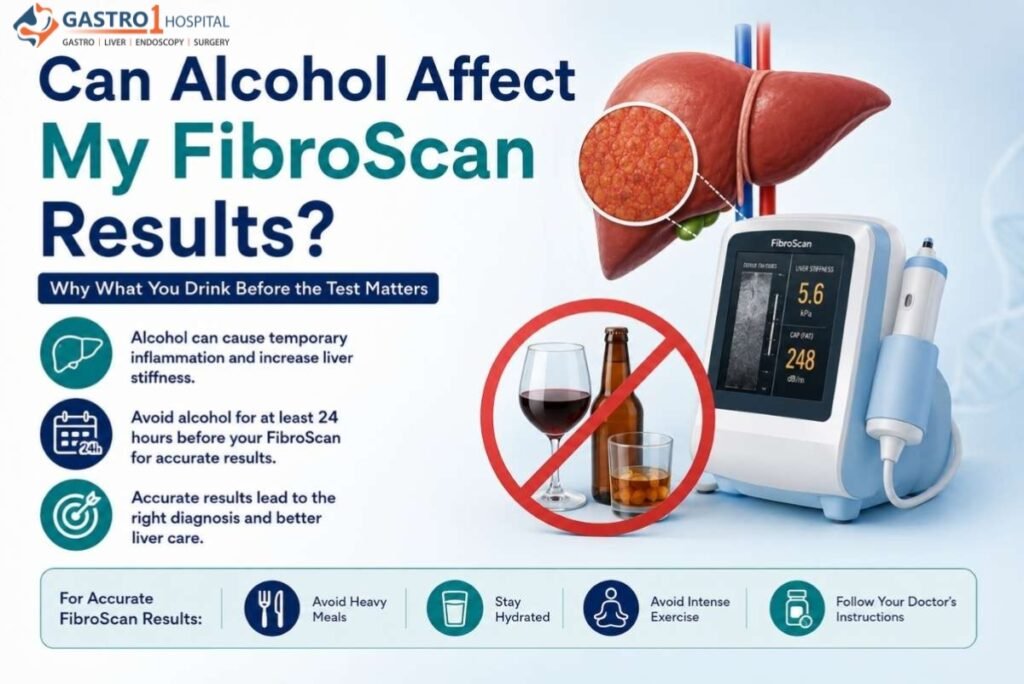
Can Alcohol Affect My FibroScan Results?
If you have a FibroScan appointment coming up, you have probably already heard someone mention “don’t drink before the test.” But does a glass of wine the night before really change anything, or is that just cautious advice doctors give out of habit? Let’s look at what actually happens inside your liver when alcohol is involved, and why timing matters more than people realise.
How FibroScan Actually Reads Your Liver
A FibroScan measures liver stiffness and fat content using painless vibrations sent through the skin. It does not use needles or radiation, which is why so many people prefer it over a traditional biopsy. The device essentially listens to how quickly those vibrations travel through liver tissue. Stiffer, more fibrous tissue passes the signal faster than healthy, elastic tissue.
This is where alcohol enters the picture. The liver is sensitive to short-term changes, not just long-term damage. Even in someone with an otherwise healthy liver, recent alcohol intake can temporarily alter how the organ behaves during the test.
Why Drinking Before the Test Skews Results
Alcohol causes short-term inflammation and swelling in liver cells. This is separate from chronic damage caused by years of heavy drinking. When you drink, even moderately, the liver works overtime to process it, and this temporary stress can make the tissue appear stiffer than it truly is.
That means someone could walk in for a Fibroscan Liver Test in Ahmedabad with a perfectly healthy liver, but if they had a few drinks the previous evening, the reading might suggest a level of fibrosis that is not actually there. This is called a false positive, and it can lead to unnecessary worry or follow-up testing.
On the flip side, alcohol can also affect fat readings in the opposite direction for some patients, depending on hydration levels and how recently they ate. There is no universal rule here, which is exactly why doctors ask patients to avoid alcohol for a set period before the scan.
What's the Safe Gap Before Testing?
Most gastroenterologists recommend avoiding alcohol for at least 24 hours before the test, though some prefer a longer window depending on your drinking history and liver condition. Fasting for a few hours beforehand is also usually advised, since food intake affects liver blood flow and can influence the reading too.
If you are unsure how long to wait, it is always better to ask directly rather than guess. Being upfront with your doctor about recent drinking, even if it feels awkward, helps them interpret your results correctly instead of chasing a number that does not reflect your real liver health.
Other Factors That Can Skew Your Reading Too
Alcohol is not the only thing that can throw off a FibroScan reading. It helps to know the full picture so you walk into the test prepared, rather than accidentally undoing your own preparation.
- Recent heavy meals: Eating a large meal right before the scan increases blood flow to the liver, which can temporarily raise stiffness readings. This is why most clinics ask for at least a short fasting window.
- Dehydration: A liver that is not well hydrated can behave differently under the scan’s vibrations, sometimes leading to inconsistent numbers.
- Active infections or fever: Any acute illness causing inflammation elsewhere in the body can indirectly affect liver readings during that window.
- Certain medications: Some drugs affect liver enzyme levels short-term, so it is worth mentioning your current medications to your doctor beforehand.
- Physical activity right before the test: Intense exercise shortly before a scan can also cause short-term muscle and tissue changes near the scanning area, which is why a calm, rested state is preferred.
None of these factors mean the test itself is unreliable. It simply means the body needs to be in a stable, normal state for the reading to reflect your actual liver health rather than a temporary blip. This is exactly the kind of detail that separates a well-guided diagnostic experience from a rushed one.
Why Patient Honesty Matters More Than People Think
A lot of patients hesitate to mention their drinking habits to a doctor, worried about being judged. But in the context of a diagnostic test like this, honesty is not about judgment; it is about accuracy. A doctor who knows you had a couple of drinks two days ago can factor that into how they read your results. A doctor who does not know might treat a mildly elevated reading as a red flag, sending you into a spiral of repeat tests and unnecessary stress.
Think of it the way you would think about telling a mechanic exactly what happened before your car started making a strange noise. The more accurate the information, the more accurate the diagnosis.
Getting Accurate Readings Matters
An inaccurate result does not just confuse; it can also lead to over-treatment or, worse, a false sense of reassurance. This is why preparation instructions before a Fibroscan Liver Test in Ahmedabad are not just formality. They exist to make sure the number your doctor sees actually reflects your liver’s real condition.
At Gastro1 Hospital, Dr Ruchir Patel and Dr Abhinav Jain guide patients through proper pre-test preparation, including alcohol and food timing, so the scan gives a dependable picture rather than a skewed one. Getting this right the first time also saves you from repeat testing later.
The Bottom Line
Alcohol and liver testing do not mix well, at least not in the hours leading up to your scan. A Fibroscan Liver Test in Ahmedabad is only as useful as the preparation behind it, so skipping alcohol beforehand is not just a suggestion; it is what makes the result worth trusting. When in doubt, talk to your doctor before the appointment rather than after.