
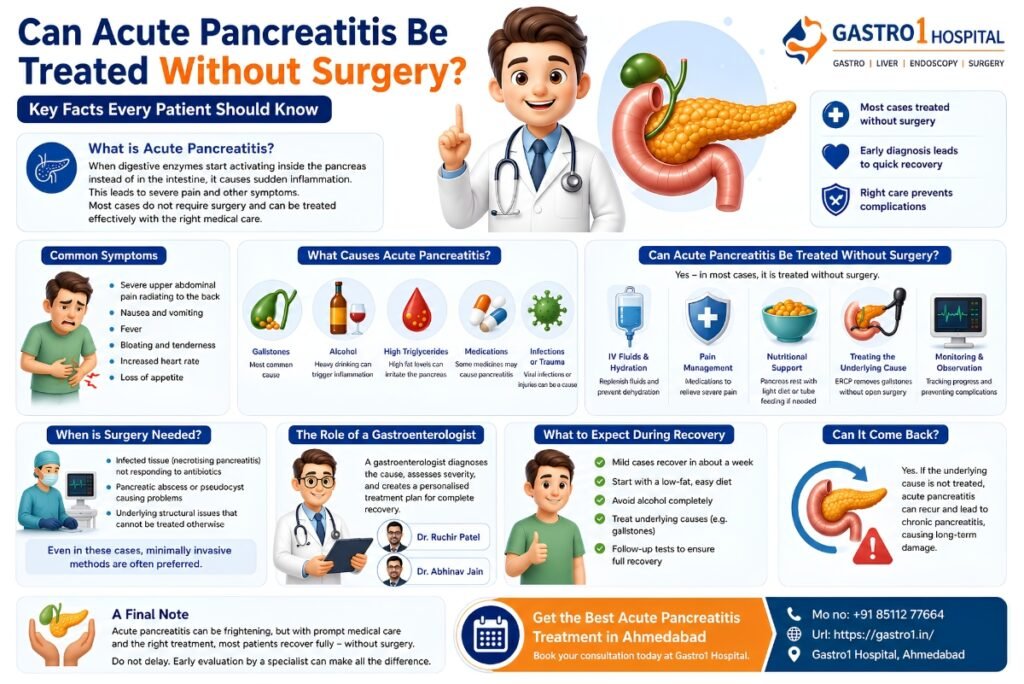
Can Acute Pancreatitis Be Treated Without Surgery? Key Facts Every Patient Should Know
What is Acute Pancreatitis?
The pancreas is a small but important organ sitting just behind the stomach. It produces enzymes that help digest food and hormones that regulate blood sugar. When this organ suddenly becomes inflamed, the condition is called acute pancreatitis.
In most cases, the digestive enzymes that are supposed to work in the intestine start activating inside the pancreas itself — and begin attacking the organ from within. This leads to sudden, severe pain and a range of other symptoms that can feel alarming and overwhelming.
The good news is that most cases of acute pancreatitis do not require surgery. With the right medical care and the best acute pancreatitis treatment in Ahmedabad, patients can recover fully and quickly.
Common Symptoms to Watch Out For
Acute pancreatitis usually comes on suddenly. The most common signs include:
- Sudden, severe upper abdominal pain that may radiate to the back — often worsening after meals
- Nausea and vomiting — a direct result of the inflamed digestive tract
- Fever — a sign that the body is fighting internal inflammation
- Bloating and abdominal tenderness in the stomach area
- Increased heart rate — a natural stress response to pain and inflammation
- Loss of appetite — making it hard to eat or keep food down
If you or someone around you experiences these symptoms together, it is important to seek medical attention promptly. Early diagnosis makes a significant difference in recovery.
What Causes Acute Pancreatitis?
Understanding the root cause is the first step toward the right treatment. The most common triggers include:
- Gallstones — Gallstones are the leading cause of acute pancreatitis. When a stone blocks the bile duct, it prevents digestive enzymes from flowing out of the pancreas — causing them to build up and inflame the organ.
- Alcohol — Heavy or prolonged alcohol consumption is another major cause. It disrupts the normal functioning of pancreatic cells and triggers inflammation over time.
- High triglyceride levels — Abnormally high fat levels in the blood can also irritate and inflame the pancreas.
- Certain medications — Some medicines, when taken long-term, may trigger pancreatitis as a side effect.
- Infections or trauma — In some cases, viral infections or an abdominal injury can be the underlying cause.
Identifying the cause early helps doctors plan the most effective treatment — and is a key part of delivering the best acute pancreatitis treatment in Ahmedabad.
Can Acute Pancreatitis Be Treated Without Surgery?
Yes — in most cases, acute pancreatitis is treated without surgery.
Mild to moderate cases respond well to non-surgical treatment. The focus is on resting the pancreas, managing pain, and preventing complications. Patients seeking the best acute pancreatitis treatment in Ahmedabad are often relieved to know that surgery is rarely the first option. Here is how doctors approach it:
- IV Fluids and Hydration. One of the first and most important steps is intravenous fluid therapy. When the pancreas is inflamed, the body loses fluids rapidly. IV fluids help stabilise the patient and prevent organ damage caused by dehydration.
- Pain Management: Acute pancreatitis can cause severe pain. Doctors use appropriate pain relief medication to keep the patient comfortable while the pancreas heals on its own.
- Nutritional Support: The pancreas needs rest to recover. In mild cases, patients are initially kept off food for a short period and gradually reintroduced to a light diet. In more serious cases, nutrition may be provided through a tube — bypassing the digestive system entirely to reduce the burden on the pancreas.
- Treating the Underlying Cause If gallstones are responsible, a procedure called ERCP (Endoscopic Retrograde Cholangiopancreatography) may be used to remove them without open surgery. This is a minimally invasive endoscopic procedure that can clear the blockage and allow the pancreas to recover.
- Monitoring and Observation Patients are closely monitored for signs of complications such as pancreatic necrosis, abscess, or organ failure. Regular blood tests and imaging help doctors track progress and adjust the treatment plan as needed.
When is Surgery Needed?
Surgery is not the first choice — but it may become necessary in certain situations:
- When infected tissue (necrotising pancreatitis) does not respond to antibiotics
- When a pancreatic abscess or pseudocyst causes persistent problems
- When the underlying cause — such as a structural issue — cannot be treated any other way
Even in these cases, modern techniques often allow for minimally invasive approaches such as laparoscopic surgery or endoscopic drainage — reducing recovery time significantly. Experienced specialists offering the best acute pancreatitis treatment in Ahmedabad always explore non-surgical options first before recommending any procedure.
The Role of a Gastroenterologist in Recovery
A gastroenterologist plays a central role in managing acute pancreatitis — from the moment of diagnosis to full recovery. They assess the severity of the condition, identify the root cause, and build a personalised treatment plan based on your specific needs.
At Gastro1 Hospital, Ahmedabad, both Dr. Ruchir Patel and Dr. Abhinav Jain specialise in diagnosing and managing pancreatic conditions — including acute pancreatitis, chronic pancreatitis, and pancreatic cancer.
What to Expect During Recovery
Recovery from acute pancreatitis depends on how severe the episode was.
Mild cases typically resolve within a week with proper rest, hydration, and medical management. More severe cases may require longer hospitalisation and a more gradual return to a normal diet and activity.
During recovery, your doctor will likely recommend:
- A low-fat, easily digestible diet to begin with
- Avoiding alcohol completely
- Treating any underlying conditions, like gallstones
- Follow-up blood tests and imaging to confirm full recovery
Can It Come Back?
Yes — acute pancreatitis can recur, especially if the underlying cause is not addressed. Recurrent episodes can eventually lead to chronic pancreatitis, which causes long-term damage to the pancreas and affects digestion and blood sugar control.
This is why treating the root cause — not just the symptoms — is so important when choosing the best acute pancreatitis treatment in Ahmedabad.
A Final Note
Acute pancreatitis can feel frightening when it strikes. But with prompt medical care and the right treatment plan, most patients recover fully — without needing surgery.
If you or a family member is experiencing symptoms of acute pancreatitis, do not delay. Early evaluation by a specialist can make all the difference.
To know more about the Best Acute Pancreatitis Treatment in Ahmedabad or to book a consultation, visit Gastro1 Hospital